

But which city? That is the question that greets every new arrival, every prospective migrant, every person who has stared at a map of Australia and wondered where exactly to plant their flag. The country is vast and the cities are varied, and the wrong choice can matter. We’ve been around long enough to have a view on this, so here it is.
Sydney
Start with the obvious. Sydney is the city the world pictures when it pictures Australia: the Opera House, the Harbour Bridge, Bondi Beach, the blinding blue of the harbour on a clear morning. It is, by most visual measures, one of the most beautiful cities on the planet, and it is entirely aware of this fact. The city wears its looks well, if a little smugly.For new arrivals, Sydney offers the full package: a massive job market skewed towards finance, professional services and tech; world-class universities; an international airport with connections to everywhere; and a social scene that never really stops. The downside is that you will pay handsomely for all of it. Sydney is Australia’s most expensive city by a considerable margin, with median house prices sitting roughly $650,000 above Melbourne’s, and a rental market that has been described by residents as “brutal” with a generosity that suggests they’re understating things. The toll roads are a special kind of misery that no amount of harbour views quite compensates for.
Come for the spectacle, stay if the salary justifies it.
Melbourne
Melbourne’s opening argument is culture, and it makes it forcefully. The laneways packed with cafes, bars and street art. The live music scene, which is genuinely one of the best in the world. The restaurants representing every cuisine imaginable, presided over by a coffee culture that other cities aspire to and fall short of. The fashion. The AFL, which functions less as a sport and more as a civic religion. Theatre productions that open in Melbourne before Sydney, a point Melburnians make at every available opportunity.It is also, by most objective measures, more liveable than Sydney. The Free Tram Zone covers the entire CBD at no cost. The rental market is brutal but measurably less brutal than its rival to the north. The famous “four seasons in one day” weather is either charming or exhausting depending on your disposition, but the city more than compensates with everything else it offers. The Economist Intelligence Unit spent much of the 2010s handing Melbourne its “World’s Most Liveable City” award, and while the title has since moved on, the city hasn’t changed.
If Sydney is the city you visit, Melbourne is the city you live in. Both cities would object to that characterisation, which is part of why the rivalry has lasted 170 years.
Brisbane
Brisbane tends to get underestimated, and Brisbane tends not to mind. The Sunshine State’s capital is Australia’s third-largest city and its fastest-growing, which suggests that a growing number of people have done the maths and liked the answer. In the 2025 Better Brisbane Index, 92% of residents rated their quality of life positively, a figure that put both Sydney and Melbourne to shame and was presumably compiled before anyone had to renew their lease.The pitch is straightforward: warmer than Melbourne, cheaper than Sydney, friendlier than both. The subtropical climate means outdoor living is not just possible but expected, and the river that winds through the city centre gives Brisbane a geography that rewards exploration. The job market is strong across healthcare, construction, education and IT, and the upcoming 2032 Olympics is funnelling infrastructure investment into the city at pace. The trade-off is a rental market that has tightened dramatically in recent years, closing the affordability gap with the southern cities faster than most people expected.
Brisbane is no longer the sleepy second city it was a generation ago. It has arrived, and it is not being modest about it.
Perth
Perth’s calling card is isolation, which is either a feature or a bug depending on who you ask. The nearest Australian capital city is a four-hour flight away, a fact that shapes the place profoundly. Perth is closer to Singapore than it is to Sydney, which explains why the city has developed a distinct identity, a certain self-sufficiency, a relaxed confidence that comes from not needing to compete with the east coast for attention.What it offers is a Mediterranean climate that is, by most measures, the best of any Australian capital: long, dry summers, mild winters, and more sunny days than anywhere else on the continent. The beaches are extraordinary, Kings Park is one of the largest inner-city parks in the world, and the housing market, while no longer cheap, remains significantly more accessible than Sydney or Melbourne. The mining and resources industry has historically produced well-paid employment, and the job market remains strong across healthcare, construction and technology. The flip side is a consumer goods market that can be pricier due to the sheer distance everything travels to get there, and a cultural calendar that, while improving, doesn’t yet match the east coast cities.
Perth rewards commitment. The people who love it tend to love it completely, which is its own kind of endorsement.
Gold Coast
The Gold Coast is not a city that plays hard to get. It leads with 57 kilometres of Pacific coastline, a subtropical climate, the kind of year-round sunshine that makes the rest of Australia feel slightly inadequate, and a personality that is firmly set to “holiday mode.” The question of whether you can actually live somewhere built around tourism is a fair one, and the answer is: yes, if you choose your suburb carefully and stay south of Surfers Paradise, which has the energy of a resort town that got a bit out of hand.The city has matured considerably from its theme-park-and-nightclub reputation. The southern suburbs around Burleigh Heads and Palm Beach have developed into genuinely liveable, community-oriented neighbourhoods with good schools, decent coffee and a coastal walkway that makes the daily commute to the beach entirely feasible. Job opportunities have diversified into tourism, hospitality, construction and a growing technology sector, and the proximity to Brisbane offers a spillover for anyone who needs access to a larger city. Housing costs, while having risen sharply in recent years, remain below Sydney and Melbourne.
It is not for everyone. But for those it is for, it tends to be emphatically so.
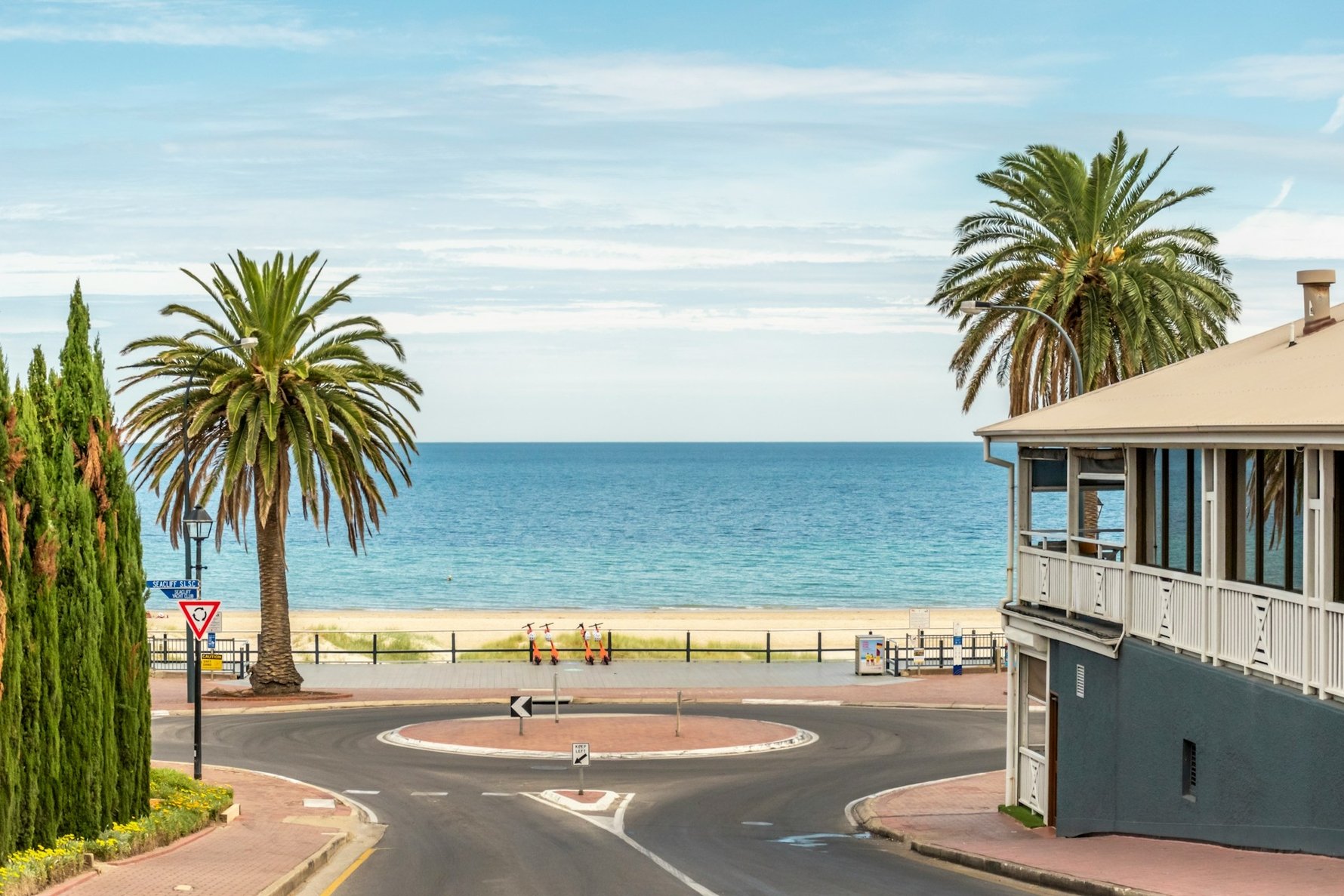
Adelaide
Adelaide is Australia’s most underrated city, and Adelaide has spent decades quietly being right about this while everyone else looked elsewhere. The South Australian capital is compact, walkable, unhurried and surrounded by some of the finest wine regions on the planet, with the Barossa Valley 45 minutes to the north and McLaren Vale 40 minutes to the south, a geographical arrangement that suggests the city was planned by someone with excellent priorities.It is also, comfortably, the most affordable of Australia’s major capitals. Consumer prices run roughly a third lower than Sydney’s, housing is substantially cheaper, and the city’s Mediterranean climate delivers mild winters and long, sunny summers without Melbourne’s meteorological mood swings. The Adelaide Fringe festival, held every February and March, is the second-largest arts festival in the world after Edinburgh, a fact that surprises people who weren’t paying attention. The city was named a UNESCO City of Music, and in the 2025 Happy City Index it was the only Australian city ranked in the top 30. Oxford Economics’ Global Cities Index placed it comfortably in global liveability rankings.
The job market is smaller than Sydney or Melbourne, and some find the pace of life a touch unhurried. Those people are welcome to pay Sydney rents.
Canberra
Everyone has a Canberra joke. The city exists because Sydney and Melbourne couldn’t agree on which of them should be the capital, so in 1913 someone drew a circle in the countryside between them and called it a compromise. It was designed from scratch by American architects Walter Burley Griffin and Marion Mahony Griffin, is home to more roundabouts per capita than anywhere in Australia, and has spent much of its existence being dismissed as a city of public servants and not much else.And yet. In 2025, Oxford Economics’ Global Cities Index named Canberra the best city in the world for quality of life, beating out every other city on the planet. This is not a drill. The factors were: safety, healthcare, life expectancy, green space, air quality, and the ratio of cultural sites to residents. Canberra has the Australian War Memorial, the National Gallery, the National Museum, Parliament House, and more museums and institutions per head of population than almost anywhere. The roads are uncongested, the commutes are short, the schools are excellent, and nearly 90% of residents recommend it as a place to live. The winters are cold and the nightlife is limited, and the people who dismissed it for decades have had to do some quiet reassessment.
It got the last laugh, and it is being perfectly civil about it.
Darwin
Darwin is not for everyone, and Darwin would be the first to agree. Australia’s northernmost capital sits closer to Jakarta than to Sydney, operates on a two-season calendar of dry and wet that bears little resemblance to what the rest of the country calls weather, and is surrounded by more raw, untamed wilderness than most people will encounter in a lifetime. It is, by any conventional measure, remote.What it offers instead is something harder to quantify. The lifestyle is genuinely relaxed, the community is tight-knit in the way that isolated places tend to produce, and the job market punches well above its weight, with strong employment in oil, gas, defence and government making Darwin one of the easier Australian cities in which to find work. Kakadu National Park is on the doorstep. The sunsets over the Timor Sea are, by all accounts, extraordinary. The dry season, from May to September, is all clear skies and cool evenings, and the outdoor dining culture that has grown around it is one of the city’s genuine pleasures.
It is not Sydney. It is not trying to be. For the right person, that is precisely the point.
Hobart
Tasmania sits off Australia’s southern tip, separated from the mainland by the Bass Strait and, in the minds of many Australians, by a certain gentle otherworldliness. Hobart, its capital, is the country’s second-oldest city and its most southerly, a place of sandstone Georgian architecture, a working waterfront, and a mountain – the distinctly named Mount Wellington – looming over the whole thing with quiet authority.The city’s main argument is MONA, the Museum of Old and New Art, an underground labyrinth of provocative and frequently baffling art built into a sandstone cliff above the Derwent River. MONA alone has done more for Hobart’s reputation than any tourism campaign, and the Dark MOFO festival it spawned each winter has turned the city into a genuine cultural destination. Beyond MONA, Hobart’s food scene trades on Tasmania’s extraordinary produce – the seafood, the cheeses, the whisky industry that has quietly made the island one of the world’s better dram destinations – and the Salamanca Market on Saturday mornings is as good as any farmers’ market in the country.
Housing is more affordable than Sydney or Melbourne, the pace of life is several notches slower than anywhere on the mainland, and the surrounding wilderness – Freycinet National Park, Cradle Mountain, the wild southwest – is the kind of landscape that makes people reassess what they actually want from a city. The job market is limited and the winters are properly cold, which winnows the field usefully. Those who stay tend to stay for good.
Comments