

What the Trek Actually Involves
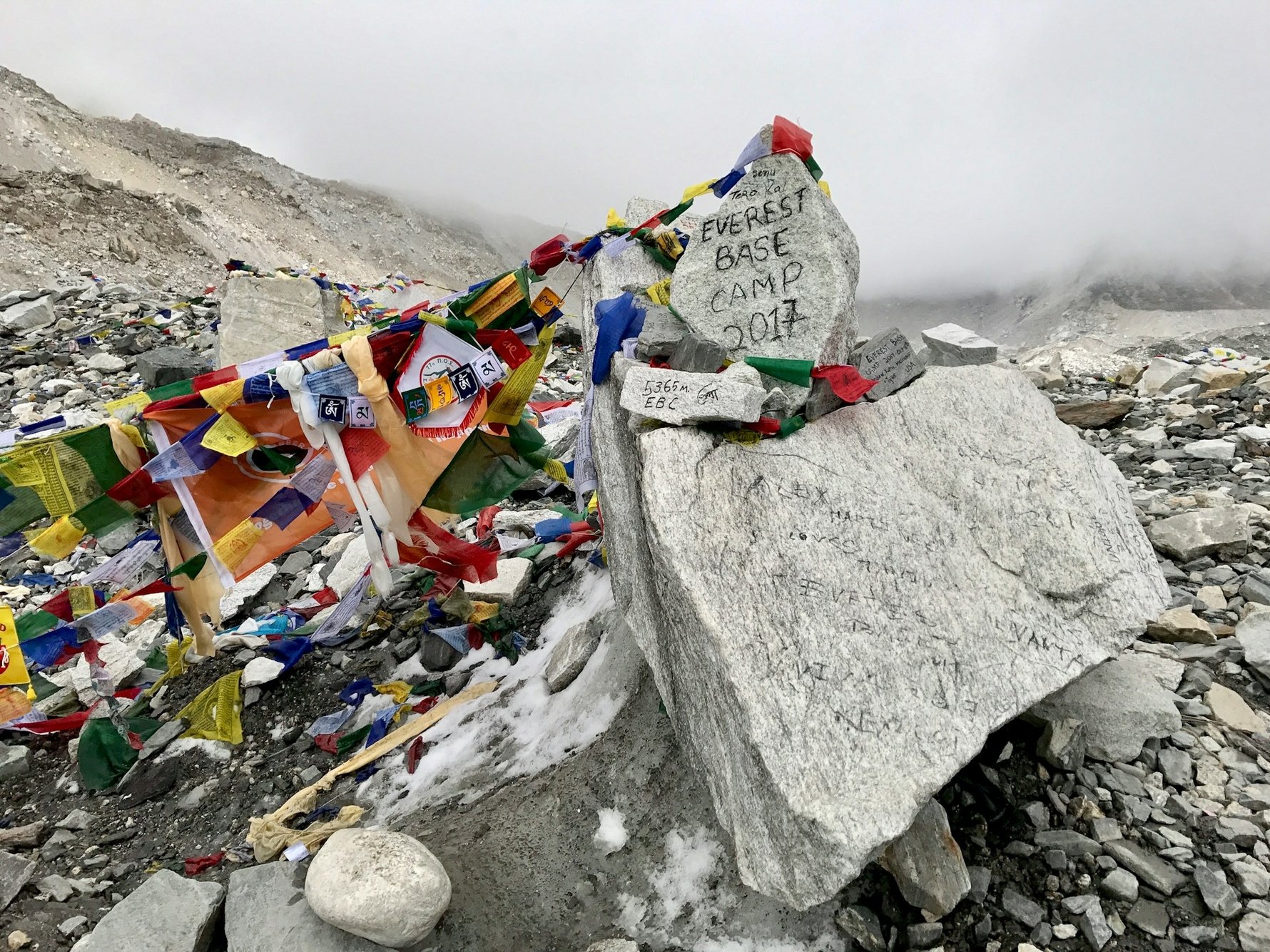
The standard Everest Base Camp trek runs 12 to 14 days return from Lukla, covering roughly 130 kilometres of trail through the Khumbu valley. It's graded moderate to challenging – not because of technical difficulty (there's none) but because of the altitude, the daily elevation gain, and the cumulative physical demand of sustained uphill walking at heights where the air is noticeably thinner than you're used to. Base camp itself sits at 5,364m. Kala Patthar, the viewpoint above Gorak Shep that offers the classic Everest summit view, sits at 5,545m – higher than base camp, and well worth the extra effort at dawn when the light hits the peaks.The trail passes through some of the most celebrated landscapes in Himalayan trekking: the Sherpa hub of Namche Bazaar (3,440m), the monastery at Tengboche with its backdrop of Ama Dablam, the high-altitude villages of Dingboche and Lobuche, and the bleak, beautiful terminal moraine of the Khumbu Glacier. Acclimatisation days in Namche and Dingboche are built into any sensible itinerary and are non-negotiable – cutting them to save time is one of the more reliable ways to end your trek early.
Getting There: The Lukla Flight Situation
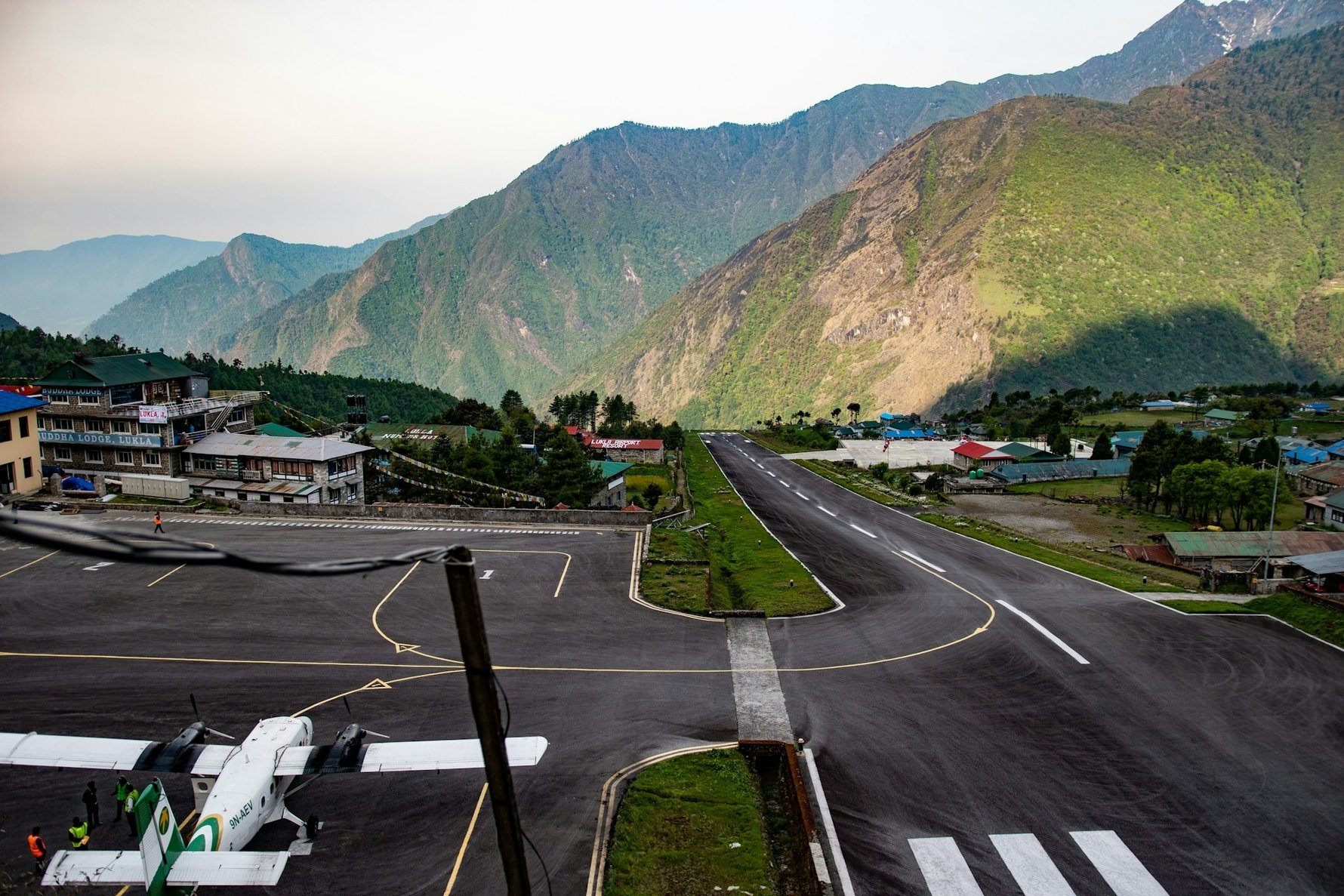
Getting to the trailhead is one of the more logistically involved parts of the EBC experience, and it's worth understanding before you book. Almost all trekkers fly into Lukla's Tenzing-Hillary Airport (2,860m) – a short, steeply-sloped strip perched on a hillside that has a well-earned reputation as one of the world's more attention-focusing landing experiences. The flight itself is spectacular: low-level Himalayan views all the way in.The complication is that during peak trekking seasons – spring (mid-March to mid-May) and autumn (late September to end of November) – flights to Lukla are diverted from Kathmandu to Ramechhap (Manthali Airport), about 132km and a four to five hour drive east of the capital. This is a permanent fixture of peak-season logistics at this point, not an occasional disruption. The Civil Aviation Authority of Nepal introduced the seasonal diversions to manage airspace congestion, and flights from Ramechhap are generally more punctual than those from Kathmandu because the smaller airport has more flexibility in the critical early morning weather window.
The practical implication: in peak season, you'll be leaving your Kathmandu hotel at around 1–2am for the drive to Ramechhap, catching a 20-minute flight to Lukla, and then starting your trek. It sounds grim on paper, and the 2am wake-up is not something anyone enjoys, but most trekkers adapt quickly once they're on the trail. Build this into your Kathmandu pre-trek schedule and don't plan anything important for the evening before your Lukla departure.
The alternative if flights are cancelled or you want to avoid the lottery: helicopter transfer direct from Kathmandu, which costs roughly USD 400–500 per person one-way and offers considerably more flexibility. Some trekkers also walk in from Salleri or the historic Jiri route, adding two to three days of lower-altitude trekking through quieter terrain before joining the main trail – a genuinely good option that skips the flight entirely and improves acclimatisation.
Permits
Two permits are required for the EBC trek. The Sagarmatha National Park Entry Permit costs NPR 3,000 (around USD 22) for foreign nationals and covers entry into the UNESCO World Heritage Site that encompasses the Khumbu region. The Khumbu Pasang Lhamu Rural Municipality Permit costs NPR 2,000 (around USD 15) and replaced the old TIMS card in the Everest region. TIMS is no longer required for EBC trekkers – you only need the two permits above.The Sagarmatha permit can be obtained at the Nepal Tourism Board office in Kathmandu before departure. The Khumbu municipal permit is collected on arrival in Lukla or at Monjo. Both are checked at multiple points along the trail, most notably at the park entrance checkpoint in Monjo. Keep them in your day pack rather than your porter's load. If you're trekking the longer Jiri or Salleri approach, you'll also need a Gaurishankar Conservation Area permit (NPR 3,000) for the lower sections of the route.
Full details on permits and where to get them are in our guide to getting trekking permits in Nepal.
Do You Need a Guide?
The national guide requirement introduced in April 2023 applies to the EBC region, as it does across Nepal's major trekking areas. The on-the-ground reality – as we cover in detail in our guide to whether you need a guide in Nepal – is more complicated, with the local Khumbu authority having issued statements suggesting independent trekking within the Khumbu region is permitted at their level. The situation remains inconsistent and enforcement varies. What's unambiguous is that a licensed guide significantly improves safety at altitude, and for first-time EBC trekkers the recommendation is straightforward: hire one.
Accommodation and Food on the Trail
The EBC route has the best teahouse infrastructure in Nepal, particularly in the lower sections of the valley. Namche Bazaar has bakeries, espresso coffee, and heated dining rooms; some lodges have hot showers and Wi-Fi. As you gain altitude, facilities become more basic and prices rise sharply – everything above Namche is carried up by porter or yak, and the cost per kilogram shows. Expect to pay significantly more for a hot shower, a chocolate bar, or a charging cable at Gorak Shep than you would at the trailhead.Dal bhat – the Nepali staple of rice, lentil soup, and vegetable curry – is available everywhere and is the best-value meal on the trail. Most teahouses operate on a model where staying at their lodge means eating at their lodge, which keeps things simple if occasionally repetitive by day ten.
The trail is busy in peak season. Booking teahouses in advance, particularly in Namche and the higher lodges approaching base camp, is strongly recommended in October and November. Your guide or agency can handle this for you.
Altitude and Safety
EBC is serious altitude. Gorak Shep, the last stop before base camp, sits at 5,164m, and Kala Patthar pushes above 5,500m. The NHS guidance on altitude sickness is essential reading before any high-altitude trek: know the symptoms, understand that AMS does not discriminate by fitness level, and understand that the only reliable treatment for serious cases is immediate descent. The Himalayan Rescue Association runs a medical clinic in Pheriche specifically for EBC trekkers – stopping in for their daily talk on altitude sickness is highly recommended and takes about an hour.Proper insurance is not optional. Make sure your policy covers trekking above 5,000m and includes helicopter evacuation. Helicopter rescue from the EBC region costs several thousand dollars without cover, and the mountains don't offer payment plans. See our guide to trekking costs in Nepal for budget guidance including insurance.
Beyond Base Camp: Side Trips and Extensions
The standard EBC itinerary can be extended in several directions for those with more time or appetite. Gokyo Lakes is the most popular alternative, replacing the final approach to base camp with a route through the Gokyo valley and its series of glacial lakes, cresting the Renjo La pass for one of the finest panoramas in the Khumbu. The Three Passes Trek links Gokyo with the EBC route via the Cho La and Kongma La passes, covering around 160 kilometres in three weeks and requiring solid fitness and good weather. Both routes need additional permits and are best done with an experienced guide.When to Go
October and November remain the prime window for EBC: clear skies, open trails, and views to make your head spin. April and May are the second choice, with blooming rhododendrons lower on the trail and expedition teams on their way to the summit adding a charged atmosphere to Namche and beyond. Spring haze can limit views at lower elevations, but above 4,000m conditions are generally good. The route is not recommended in the monsoon months (June to August) or winter (December to February) without significant experience and specific planning. See our full guide to the best time to trek in Nepal.For everything you need before you go, see our overview of trekking in Nepal, our guides to permits and costs, and our coverage of the Annapurna region, Langtang Valley, and the Manaslu Circuit.
Comments